From Wikipedia, the free encyclopedia
According to the post-1900 publications of Theosophy, i.e. the writings of C. W. Leadbeater, Alice A. Bailey, and Benjamin Creme, as well as the Ascended Master Teachings of Guy Ballard, Elizabeth Clare Prophet, Geraldine Innocente, Joshua David Stone, and other Ascended Master Teachings teachers, Sanat Kumara is an "advanced being" at the tenth level of initiation who is regarded as the Lord or Regent of Earth and of humanity, and the head of the Spiritual Hierarchy of Earth.
It is believed by these authors that he is the founder of the Great White Brotherhood, which is composed of Ascended Masters and volunteers from other worlds who have joined together to advance spiritual evolution on Earth.[1]
[edit] Sanat Kumara (Sanat Kumar) in Hinduism and Jainism
Sanat Kumara (spelled "Sanat Kumar" or sometimes "Sanath Kumar") appears as a rishi in the Hindu religious text the Chandogya Upanishad, and he is also a deity in the Jain religion. A shrine to Sanat Kumar which attracts and unites people of all religions and faiths is situated in the town of Kataragama, Sri Lanka. In Sanskrit Sanat means "eternal", Kumara means a "youth", which would make "Sanat Kumar" the "eternal youth" in Sanskrit.
Shamballa is the most sublime center of our Planet. It is said to be the Sahasrara in relation to our planet Earth. This is where the Kumar resides. At the planetary level, the Kumar is called SANATH Kumar. At the cosmic level, he is called SUBRAHMANYA. Subrahmanya, Sanatana, Sanaka, Sanandana and Sanath Kumar are all the names relating to the Sahasrara centers of different Systemic Existences. At the Supra Cosmic plane he is called Sanatana. At the Cosmic plane it is Subramanya and at the Solar plane the Kumar is Sanaka. At the Planetary plane it is Sanandana and on the Planet, it is Sanath Kumar. So Sanath Kumar is an aspect of Kumar that resides in Shambala. In the scriptures, especially Mahabharata, says that it is Sanath Kumar, who comes down to help the Plan, when Lord Krishna came to be. He was born to Lord Krishna as his son and he was named Pradyumna. Sanath Kumar incarnates himself through the Divine Mother Rukmini as Pradyumna. On completion of his work, He again gets back to his original position and takes to the seat in Shambala as Sanath Kumar. These details are given in the last chapters of Mahabharata. Sanath Kumar is the Planetary Lord. It is said that He receives the energies from higher planes, in the month of Aries and transmits the same to the Spiritual Hierarchy in the month of Taurus.
[edit] Shamballa in Buddhism--home of the King of the World
Shambhala (Tib. bde 'byung) in Vajrayana Buddhism (the religion of Tibet) is a Sanskrit term meaning "place of peace/tranquility/happiness". Shakyamuni Buddha is said by Vajrayana Buddhists to have taught the Kalachakra tantra on request of King Suchandra of Shambhala; the teachings are also said to be preserved in Shamballa. The Stanzas of Dzyan from which Madame Blavatsky claimed to have gotten the information in The Secret Doctrine are believed by some scholars to have been a mistranslation of words Kalachakra tantra (rGyud-sde in Tibetan).[2] Shambhala is ruled over by a line of Kings of Shambhala known as Kulika or Kalki Kings (Tib. Rigden), a monarch who upholds the integrity of the Kalachakra tantra. In the teachings of Vajrayana Buddhism, the King of Shamballa is often metaphorically referred to as The King of the World. Shamballa was thought by the Tibetans to be somewhere north of Lake Manasarovar and its adjacent Mount Kailasa, a sacred mountain in Tibet where it is thought that all the dragon currents intersect.
[edit] Sanat Kumara in Theosophy
Sanat Kumara was mentioned briefly by the theosophist Helena Blavatsky.[3] She claimed he belonged to a group of beings, the "Lords of the Flame", whom Christian tradition have misunderstood as Lucifer and the fallen angels.[4]
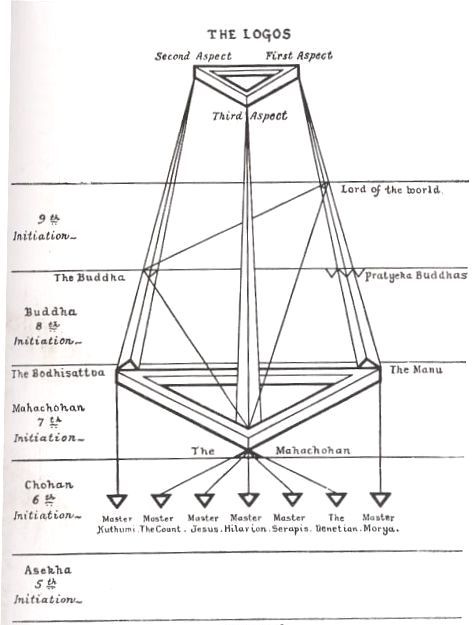
Sanat Kumara gained greater prominence when her follower Charles W. Leadbeater wrote that Sanat Kumara was the "King" or Lord of the World, and the head of the Great White Brotherhood of Mahatmas who had revealed the principles of theosophy.[5]
Later theosophists such as Alice Bailey and Elizabeth Clare Prophet have embellished the story with further details. He is usually depicted as having the appearance of a 16 year old boy.
[edit] The Descent of Sanat Kumara and the Lords of the Flame from Venus
Leadbeater and later adherents of Theosophy believe that Sanat Kumara came to Earth 18,500,000 years ago (A.E. Powell gives a figure of 16,500,000 years ago) from the etheric plane of the planet Venus (According to Elizabeth Clare Prophet's Church Universal and Triumphant he came only 2,500,000 years ago). In Theosophy, the beings that helped Sanat Kumara organize the expedition from Venus are called the "Lords of the Flame". C.W. Leadbeater and Annie Besant said that Sanat Kumara brought 30 "Lords of the Flame" with him from Venus to help him set up his colony.[6] In the later version of the story promulgated by Guy Ballard, notable "Lords of the Flame" include Gautama Buddha, and the World Teacher (the being referred to alternately as Maitreya or Christ by Benjamin Creme). Elizabeth Clare Prophet's Church Universal and Triumphant teaches that Sanat Kumara and the Lords of the Flame also brought 144,000 souls with them from Venus. Alice Bailey, on the other hand, gives the number 105 only. The prior incarnation and only incarnation of Maitreya, the Lord of Consciousness, according to some interpretations (not C.W. Leadbeater's), is Gautama Buddha; according to these interpretations, he essentially inhabited the body of Buddha with Siddhartha's permission.
Sanat Kumara is regarded as the great guru, saviour of Earth. Believers in him see him in all the major religions, as Skanda/Kartikkeya in Hinduism, Brahma-Sanam Kumar in Buddhism, Ancient of Days in Judeo-Christianity and Ahura Mazda in Zoroastrianism. It is also considered that Sanat Kumara is Al Khdir (green man) known to Sufi Muslims (according to Dakshinamurti).
It is maintained in most of these versions of Theosophy that Venus is the most spiritually advanced planet of our solar system. The beings living on the etheric plane of Venus are said to be hundreds of millions of years ahead of us in their spiritual evolution.[7][8] It is said that the governing council of Venus--the Seven Holy Kumars--sent one of themselves, Sanat Kumara, here to guide us.[9]
While this is true, Sanat Kumara essentially becomes the avatar on Earth. Some believe his current incarnation as an avatar is Sathya Sai Baba whose name was once Sanat Kumara, although this is not a mainstream belief in Theosophy or the Ascended Master Teachings. According to this belief, there is a new being on Shamballa who is a fourteenth level initiate whose name is again Sanat Kumara.
According to Theosophy, once Sanat Kumara arrived here, he directed the construction of the city of Shamballa on the etheric plane above the Gobi Desert to serve as his headquarters.
[edit] City plan of Shamballa
The main temple of Shamballa is topped with a golden dome and is surrounded by seven smaller temples—one for each of the seven rays. These temples are located on a number of wide boulevards resembling the Champs-Elysees.[10] According to Elizabeth Clare Prophet, George Washington was divinely inspired by the Ascended Masters to choose city planner Pierre L'Enfant to create the city plan of Washington DC which, it is claimed, he unconsciously modeled on the plan of the city of Shamballa.
One of the largest structures in Shamballa is Sanat Kumara’s palace, a structure several stories high which has thousands of rooms. The outer appearance is like that of an enormous Thai Buddhist temple. The interior designs of the rooms inside are in all the styles used by civilizations throughout human history and some styles that have yet to occur in the future. Sanat Kumara and his family live in the upper stories of the palace and Gautama Buddha lives in the lower stories.
Theoretically, the existence of Shamaballa is scientifically verifiable because, according to Alice A. Bailey, those who are adept at white magic can travel there in their etheric body by the technique of etheric projection and see it for themselves.[11]
[edit] Appellations (titles) of Sanat Kumara
The most common title attributed to Sanat Kumara in the Theosophical religious tradition is "Lord of the World". C.W. Leadbeater also states that an important duty of Sanat Kumara is to participate in an elaborate ritual every Wesak (the Full Moon of May) led by Gautama Buddha, and also participated in by the Maitreya (the being Theosophists identify as Christ), in which cosmic energy is focused from the "Solar Logos" to Earth in order to keep our planet's cosmic energy in balance. The ritual is said to take place in a ravine in southern Tibet (the Frontispiece of Leadbeater's book The Masters and the Path has a picture of the ritual taking place) and, it is stated by Leadbeater, can be viewed by in the etheric body or in the physical body by those who have etheric sight.[12]
Paradoxically, two other common appellations of Sanat Kumara are two opposite titles: "The Ancient of Days" (because he has been on Earth millions of years) and "The Youth of Sixteen Summers" (because even though he is millions of years old, he still looks like he is 16 years old). Another of his titles is "The One Initiator" because it is said by C. W. Leadbeater in the Masters and the Path that he personally performs the initiation ceremony for anyone who has reached the third level of spiritual initiation. Alice A. Bailey indicates the same in her writings.
In the all organizations subscribing to the "Ascended Master Teachings", Sanat Kumara is presented as an Ascended Master. He is also currently, according to the Ascended Master Teachings, known as the "Regent Lord of the World" in deference to Gautama Buddha having taken the office of "Lord of the World" in 1956.[13] With Buddha taking on more of the day-to-day administrative tasks of governing the planet, this arrangement allows Sanat Kumara more time for long-range galactic planning and interstellar diplomacy.
Sanat Kumara's symbol of the authority of his office as Lord of the World is a 2-foot-long (0.61 m), 2-inch-wide (51 mm) magic wand called the Rod of Power made of the metal orichalcum, with cone-shaped diamonds on each end.[14]
[edit] Lady Master Venus
The "I AM" Activity, The Bridge to Freedom, Church Universal and Triumphant and all other "Ascended Master Teachings" organizations believe that Sanat Kumara has a Divine Complement (Twin Flame) (i.e., a celestial wife) - Lady Master Venus[1][15]- the New Age "Goddess of Love".[16] The Ascended Lady Master Venus is usually depicted as having the appearance of a 16 year old girl. Sanat Kumara is believed to have married Lady Master Venus millions of years ago on Venus before he came to Earth.
[edit] Lady Master Meta
According to the Ascended Master Teachings, Sanat Kumara and the Lady Master Venus have a daughter named the Lady Master Meta [2] [17] who they brought with them from Venus. She is said to have incarnated as an avatar in Atlantis (where she served as the high priestess at the Temple of Healing) and in Sassanian Persia, where she married a mortal and had three children. In the Ascended Master Teachings, she is revered as the Goddess of Healing and is the patron deity of doctors and nurses.[18] Since she is immortal, possessing a celestial body like Sanat Kumara and the Lady Master Venus, she, like the Lady Master Venus, also has the appearance of a 16 year old girl.
[edit] Master Cha Ara
According to the Ascended Master Teachings, the Master Cha Ara [3] [19] was originally one of the three children of Lady Master Meta when she incarnated as an avatar in Sassanian Persia. He became a master alchemist who formulated an elixir of immortality made from rose petals and other ingredients. This enabled him to quickly achieve ascended masterhood. He uses small amounts of the elixir to heal people. He is the protector of all Zoroastrians. He works with St. Germain to bring about the New Age in the Americas. Lady Master Meta’s husband and her other two children from her descent as an avatar to Sassanian Persia have also become ascended masters but their names have not yet been revealed.[20]
[edit] Masters of the Ancient Wisdom
According to the "I AM" Activity, the Church Universal and Triumphant[21] and others, the Ascended Masters (The beings the original Theosophists called the "Masters of the Ancient Wisdom"), such as the Master Jesus, Saint Germain, Kuthumi, and others are working for the Spiritual Hierarchy of our planet, under the leadership of Sanat Kumara, Gautama Buddha, and Maitreya. Many theosophists believe the "Masters" utilize the cosmic power of the Seven Rays to advance the Plan of the Masters to encourage the continual advance of civilization on Earth toward higher levels of consciousness. One of the beliefs of adherents of these belief systems is that the Masters of Wisdom have united together in an organization called the Great White Brotherhood.[22]
[edit] Sanat Kumara also a manifestation of the Spirit of the Earth and the Solar Logos
The Theosophist A.E. Powell stated that Sanat Kumara (whom he refers to as the Lord of the World) is in continuous telepathic rapport with the Spirit of the Earth (i.e., the Planetary Logos--equivalent to the goddess known in some religions as Gaia or as Prithivi in Hinduism).[23]C.W. Leadbeater and Alice A. Bailey stated that Sanat Kumara is in continuous telepathic rapport with the Solar Logos (the being considered by theosophists as the consciousness of the Sun). It is believed in Theosophy that Sanat Kumara captures the mystical power of the Seven Rays from the Solar Logos and distributes it to his assistants who guide the spiritual evolution of humanity, the Masters of the Ancient Wisdom (the Ascended masters), who then focus the power to us. An intermediate trinity of Pratyeka-Buddhas assists Buddha in stepping down this power from Sanat Kumara to Earth's Spiritual Hierarchy [24], and these Buddhas are also said to be Kumars originally from Venus.
[edit] The council chamber of the Lord of the World
According to the Alice A. Bailey material, Sanat Kumara conducts business in an enormous room in his palace called The Council Chamber of the Lord of the World. It is here that he regularly meets with Maitreya, the Maha Chohan, Djwal Khul, St. Germain, the Master Jesus and the other Masters of the Ancient Wisdom to assess the progress being made in implementing The Plan of the Masters to bring the human race to higher levels of consciousness. According to C.W. Leadbeater, it is also here that he periodically personally receives ambassadors from other solar systems.[25]
[edit] Sanat Kumara's cosmic bureaucracy
According to the Alice A. Bailey material, Sanat Kumara has many assistants who help him in his arduous task of spiritually governing Earth as its presiding deity. These include The Watcher (also called the Silent Watcher or the Great Silent Watcher), whose function it is to continually watch the akashic records and download daily all the information on them relevant to the life waves of Earth and forward it to the Custodian of the Hall of Records.[26] (the Watcher is part of a special race of beings who fulfill this function that are posted on planets thruout the Cosmos [27] ); the Lords of Karma-- Alice A. Bailey mentioned three Lords of Karma but did not name them; they are called in the Ascended Master Teachings the Karmic Board and they are stated to number seven and each of them is identified by name: The Great Divine Director (1st ray), The Goddess of Liberty (2nd ray), Lady Master Nada (3rd ray), Cyclopea (4th ray), Pallas Athena (5th ray), Lady Master Portia (6th ray), and Kwan Yin (7th ray).[28][29]. The Karmic Board decides when souls that are between lives are to reincarnate again (if a disembodied soul desires to reincarnate somewhere or somewhen else than where they have been assigned, they must file an appeal with the Karmic Board—each person has to file an appeal to the member of the board that handles the appeals for their soul ray); and the one Alice A. Bailey calls the Custodian of the Hall of Records (called the Keeper of the Scrolls in the Ascended Master Teachings), the being who is in charge of the Hall of Records, an enormous administrative complex near Sanat Kumara’s palace in the etheric city of Shamballa—this is where the Recording Angels and those souls who are between incarnations who volunteer to give up their time in Summerland and help perform this work make visual records (utilizing the most advanced supercomputers on the etheric plane of Earth) of everything that happens in everyone’s lives on Earth. The raw data is first downloaded daily by The Watcher from the akashic records and fed by him to the Custodian of the Hall of Records and thence forwarded to the recording angels and their volunteer helpers. These video records are sorted daily first into one of seven general files by the soul ray (see seven rays) of the soul that is reincarnating, and then downloaded from that general file into a special individual file for each soul that can be consulted by the Karmic Board if that soul makes an appeal before it.
Another important part of Sanat Kumara's cosmic bureaucracy is the Cosmic Secret Service--Sanat Kumara's intelligence service. This organization is headed by the Master K-17. The Master K-17 works directly under Maitreya and St. Germain. The headquarters of the Cosmic Secret Service is in a large building in Shamballa adjacent to the Hall of Records. The CSS, with its highly advanced supercomputers, keeps dossiers on everyone incarnated on Earth, downloaded from the information in the Hall of Records. This information is used to assess whether the Ascended Masters can effectively recruit someone on the physical plane to help them implement the Plan of the Masters. CSS agents analyze what is happening on Earth and file situation reports which are then forwarded to the Ascended Masters in order to help them better implement the Plan of the Masters. Those subversives on Earth who oppose the Plan of the Masters receive the special attention of the agents of the CSS. When agents of the CSS materialize on the physical plane, besides having the ability to teleport at will and having photographic quality remote viewing abilities, they have a special cloak of invisibility that they can use as needed. The CSS has a secret villa in Paris that they operate out of on the physical plane.[30]
[edit] Omri-Tas, Ruler of the Violet Planet
Omri-Tas, the Ruler of the Violet Planet, is a Galactic level Ascended Master (cosmic being) who with his (unnamed to us so far) twin flame (celestial wife) [4][31], is Sanat Kumara's violet flame supplier. The violet flame is composed of a special type of etheric matter particles, which may plausibly be called violetrons, that are capable of cleansing bad karma. Omri-Tas rules a planet on the etheric plane called the Violet Planet, which is apparently several dozen to several hundred light years from Earth. The Violet Planet is one of many throughout the Cosmos that serve as reservoirs for the violet flame. Omri-Tas is the ruler of the Violet Planet that is closest to Earth and which is responsible for transmitting the violet flame from the Great Central Sun of the Cosmos via the Galactic Logos to planets in our sector of the Milky Way Galaxy. Omri-Tas or one of his representatives periodically teleport from the Violet Planet to Shamballa with canisters of violet flame to replenish the violet flame in the large circular pool in the Temple of the Violet Flame in Shamballa, from which devotees of the Ascended Master Teachings living on Earth draw upon to do their invocations to St. Germain called Violet Flame Decrees.[32]
[edit] Beliefs according to Ascended Master Teachings
Beliefs according to the Church Universal and Triumphant and other Ascended Master Teachings organizations regarding Sanat Kumara are slightly different than, and contain additions to, the beliefs expressed by the earlier Theosophists cited above. These beliefs are summarized in the following paragraphs:
Sanat Kumara. Great Guru of the seed of Christ throughout cosmos; Hierarch of Venus; the Ancient of Days spoken of in Daniel 7:9, 13, 22. Sanat Kumara (from the Skt., meaning "always a youth") is one of the Seven Holy Kumars. Long ago he came to Earth in her darkest hour when all light had gone out in her evolutions, for there was not a single individual on the planet who gave adoration to the God Presence. Sanat Kumara and the band of 144,000 souls of Light who accompanied him volunteered to keep the flame of Life on behalf of Earth's people. This they vowed to do until the children of God would respond to the love of God and turn once again to serve their Mighty I AM Presence. Sanat Kumara's retreat, Shamballa, was established on an island in the Gobi Sea, now the Gobi Desert. The first to respond to his flame was Gautama Buddha, followed by Lord Maitreya and Jesus.Elizabeth Clare Prophet has pointed out that Sanat Kumara is revered in Hinduism as one of the four or seven sons of
Brahma. They are portrayed as youths who have remained ever pure. He is said to be one of the oldest progenitors of mankind. Sanat Kumara has revealed his fourfold identity as champion of the
Cosmic Christ in the four quadrants of Matter and in his own Lightbearers as (1) Karttikeya, the god of war and commander-in-chief of the army of gods. Legends say Karttikeya was born specifically to slay the demon Taraka, who symbolizes the lower mind, or ignorance. (2) Kumar, "the holy youth." (3) Skanda, the son of Shiva. (4) Guha, "cave"; so called because he lives in the cave of the heart.Sanat Kumara held the position of Lord of the World until his disciple Gautama Buddha reached sufficient attainment to hold that office. On January 1, 1956, Gautama Buddha was crowned Lord of the World and Sanat Kumara, as Regent Lord of the World, returned to Venus and to his twin flame, the Lady Master Venus. There, in another dimension of the 'physical/etheric' octave-together with the other Holy Kumars, Mighty Victory and his legions, many Ascended Masters and the Lightbearers of Venus-he continues his service with the Great White Brotherhood on behalf of planet Earth. On May 25, 1975, Lady Master Venus announced that she had come to "tarry for a time on Terra" to dedicate anew the fires of the Mother as Sanat Kumara keeps the flame on Venus. Sanat Kumara frequently dictates through the Messenger and envelops the Earth in the swaddling garment of his auric field. See also Lord of the World.
(See Sanat Kumara On the Path of the Ruby Ray: The Opening of the Seventh Seal, Pearls of Wisdom, 1979, vol. 22, Book I.)
[edit] Benjamin Creme's views
Benjamin Creme subscribes to the modern esoteric view that Nordic aliens (like those mentioned by George Adamski--Creme accepts Adamski's sightings as valid) pilot flying saucers from the civilization on Venus that is thought to exist on the etheric plane (Esotericists believe that since the Venusians' civilization is on the etheric plane, the planet's heat doesn't affect them) and are capable of stepping down the level of vibration of themselves and their craft to the slower level of vibration of the atoms of the physical plane.[33] Thus, Creme's followers assume that Sanat Kumara and the Lords of the Flame (Nordic aliens themselves) came from Venus in a flying saucer ("the flame" is thought to refer to the exhaust of the flying saucer). How, they ask, did Sanat Kumara get to Earth from Venus if it wasn't on a flying saucer? Creme's disciples believe that there is regular flying saucer traffic between Venus and Shamballa as well as other locations on Earth, especially areas where crop circles appear. Creme's acolytes believe that Shamballa is equipped with an astrodrome as well as with numerous flying saucer landing pads attached to the tops or the sides of the buildings to accommodate the heavy flying saucer traffic from Venus. Since Shamballa is envisioned as a floating city about five miles above the surface of the earth on the etheric plane, there are also numerous entrances in the basements of the buildings, where flying saucers can enter from the bottom of the city and park in spacious flying saucer parking garages provided in the basement levels of the buildings. In addition, says Creme, the Venusians have cigar-shaped mother ships up to four miles long to accommodate the transport of multiple individual flying saucers to and from Venus.[34] According to Creme, sometimes flying saucers from places more distant than Venus, such as from Mars, the Moons of Jupiter, Uranus, Sirius, the Pleiades, and beyond, fly in to pay a visit at Shamballa. Since, according to Creme, the Venusians flying saucer designers outsource the actual construction of their flying saucers to the Martians (who are said to dwell on the etheric plane of Mars)[35], whom he describes as the "master engineers of the solar system"[36], Shamballa provides a convenient neutral ground where the Venusians and the Martians can meet to evaluate new flying saucer designs and negotiate flying saucer construction contracts between themselves.
[edit] Criticism of Benjamin Creme
Creme has made a number of predictions based on his claims of receiving telepathic messages. These have failed to come true, leading to him being considered a figure of amusement in the press.[37][38][39]
[edit] Skeptical view
The scholar K. Paul Johnson maintains that the "Masters" that Madame Blavatsky wrote about and produced letters from were actually idealizations of people who were her mentors.[40]
Also see the article “Talking to the Dead and Other Amusements” by Paul Zweig New York Times October 5, 1980, which maintains that Madame Blavatsky's revelations were fraudulent.
However, Sanat Kumara, although mentioned in passing by Madame Blavatsky, was never mentioned by her as an important "Master" that Blavatsky claimed to have met. He was first presented, under the name Lord of the World, as the head of the "Masters" by C.W. Leadbeater in his 1925 book The Masters and the Path.[41]
[edit] Sanat Kumara in popular culture
Panelology
- Marvel Comics published a graphic novel in 1986 called Dr. Strange: Into Shambhala, in which Dr. Strange sought Shambhala as a metaphor for greater enlightenment. He prepared to journey to Shamballa by etheric projection to meet Sanat Kumara and some of the other masters, but instead of doing so decided to seek enlightenment on his own.
- Sanat Kumara’s helper The Watcher was made into a Marvel Comics character called Uatu by Stan Lee in 1963. The Watcher comic books have tales about the race of beings called The Watchers spread throughout the Cosmos that it is believed in Theosophy and the Ascended Master Teachings that The Watcher belongs to.
[edit] See also
- ^ Schroeder, Werner Ascended Masters and Their Retreats Ascended Master Teaching Foundation 2004. Describes the founding of Shamballah by Sanat Kumara
- ^ Reigle, David and Nancy Blavatsky's Secret Books San Diego 1999. ISBN 0-913510-76-9
- ^ Blavatsky, Helena Petrovna The Secret Doctrine: The Synthesis of Science, Religion, and Philosophy- Theosophical Publishing House, 1888. Sanat Kumara - Volume I: 89, 457 - 458; Volume II: pages 106, 140, 319, 584.
- ^ Blavatsky, Helena Petrovna The Secret Doctrine: The Synthesis of Science, Religion, and Philosophy- Theosophical Publishing House, 1888. Volume II pp 243 ff
- ^ Leadbeater, C.W. The Masters and the Path. Adyar, India: Theosophical Publishing House, 1925 (Reprint: Kessinger Publishing, 1997) Pages 296-299
- ^ Leadbeater, C.W. The Masters and the Path. Adyar, India: Theosophical Publishing House, 1925 (Reprint: Kessinger Publishing, 1997) Page 299
- ^ Powell, A.E. The Solar System London:1930 The Theosophical Publishing House (A Complete Outline of the Theosophical Scheme of Evolution) See chart on Page 33
- ^ Planetary Schemes of Our Solar System According to Theosophy:
- ^ Prophet, Elizabeth Clare and Prophet, Mark (as compiled by Annice Booth) The Masters and Their Retreats Corwin Springs, Montana:2003 Summit University Press Page 339-341
- ^ Prophet, Elizabeth Clare and Prophet, Mark (as compiled by Annice Booth) The Masters and Their Retreats Corwin Springs, Montana:2003 Summit University Press Pages 465-470 Shamballa
- ^ Bailey, Alice A. The Treatise on White Magic New York:1934--Lucis Publishing Co.
- ^ Leadbeater, C.W. The Masters and the Path. Adyar, India: Theosophical Publishing House 1929 (Reprint: Kessinger Publishing 1997)--Fold-out picture facing the title page of the book shows a picture of Buddha performing the Wesak ritual
- ^ Luk, A.D.K.. Law of Life - Book II. Pueblo, Colorado: A.D.K. Luk Publications 1989. Describes Sanat Kumara and his role in founding the Brotherhood on Earth and passing the office of "Lord of the World" to Gautama.
- ^ Leadbeater, C.W. The Masters and the Path. Adyar, India: Theosophical Publishing House 1925 Pages 268–269
- ^ Image of Lady Master Venus shown above is originally from the Church Universal and Triumphant):
- ^ Booth, Annice The Masters and Their Retreats Summit Lighthouse Library June 2003, Summarizes the beliefs about Sanat Kumara by The I AM Activity, The Bridge to Freedom, and The Summit Lighthouse
- ^ Source of (not very clear) Image of the Lady Master Meta—Etheric Retreats website:
- ^ Prophet, Elizabeth Clare and Prophet, Mark (as compiled by Annice Booth) The Masters and Their Retreats Corwin Springs, Montana:2003 Summit University Press Pages 227-228 Lady Master Meta
- ^ Source of Image of Master Cha Ara--World Global Express Brotherhood of Light:
- ^ Prophet, Elizabeth Clare and Prophet, Mark (as compiled by Annice Booth) The Masters and Their Retreats Corwin Springs, Montana:2003 Summit University Press Page 52 Master Cha Ara; Pages 227-228 Lady Master Meta
- ^ Shearer, Monroe & Carolyn I AM Adorations, Affirmations & Rhythmic Decrees Acropolis Sophia Books and Works 1998. Refers also to the other six Kumars that assist Sanat Kumara
- ^ The Great White Brotherhood in the Culture, History and Religion of America. Summit University Press 1975
- ^ Powell, A.E. The Solar System London:1930 The Theosophical Publishing House (A Complete Outline of the Theosophical Scheme of Evolution)
- ^ Spiritual Hierarchy chart from C.W. Leadbeater's 1925 book "The Masters and the Path":
- ^ Leadbeater, C.W. The Masters and the Path Adyar, Madras, India: 1925--Theosophical Publishing House
- ^ Leadbeater, C.W. The Masters and the Path. Adyar, India: Theosophical Publishing House, 1925 (Reprint: Kessinger Publishing, 1997) Page 300
- ^ Prophet, Elizabeth Clare and Prophet, Mark (as compiled by Annice Booth) The Masters and Their Retreats Corwin Springs, Montana:2003 Summit University Press (Note: the idea that Watcher was part of race of beings posted thruout the Cosmos to fulfill this functions was first promulgated by C.W. Leadbeater and continued by Guy Ballard and Elizabeth Clare Prophet) The Great Silent Watchers Page 122
- ^ Identity of the seven members of the Karmic Board according to the Ascended Master Teachings—The Goddess of Liberty, Kwan Yin, Pallas Athena, The Great Divine Director, Cyclopea, Nada, and Portia:
- ^ Prophet, Elizabeth Clare and Prophet, Mark (as compiled by Annice Booth) The Masters and Their Retreats Corwin Springs, Montana:2003 Summit University Press Pages 153-155 The Karmic Board
- ^ Prophet, Elizabeth Clare and Prophet, Mark (as compiled by Annice Booth) The Masters and Their Retreats Corwin Springs, Montana:2003 Summit University Press Pages 160-163 Master K-17 and the Cosmic Secret Service
- ^ Source of Image of Omri-Tas, Ruler of the Violet Planet and his Twin Flame--"Sintonia St. Germain" Portuguese language Ascended Master Teachings website:
- ^ Prophet, Elizabeth Clare and Prophet, Mark (as compiled by Annice Booth) The Masters and Their Retreats Corwin Springs, Montana:2003 Summit University Press Pages 249-253 Omri-Tas, Ruler of the Violet Planet
- ^ Creme, Benjamin The Reappearance of the Christ and the Masters of the Wisdom London:1980 Tara Press Page 205
- ^ Creme, Benjamin The Great Approach Amsterdam:2001 Share International Foundation Page 133
- ^ Creme, Benjamin Maitreya's Mission--Volume III Amsterdam:1997 Share International Foundation Page 337
- ^ Creme, Benjamin Maitreya's Mission--Volume III Amsterdam:1997 Share International Foundation Page 194
- ^ "Francis Wheen's Diary". The Independent. January 27, 1991. "Alas and alack, on the great issue of the day poor Mr Maitreya seems to have stubbed his toe rather badly. After Saddam sent his tanks across the border last August, Maitreya suggested that a mystical power and force in nature will make Iraq withdraw totally and unconditionally from Kuwait. In November, his message was unequivocal: The Gulf Crisis: Maitreya has made it clear from the beginning that there will be no war."
- ^ "Kiwis prove to Aussies they're not that gullible". The Evening Post. December 4, 1995. "But it's not just the eruptions at issue. Benjamin Creme, based in London and a five-time visitor to New Zealand as ambassador for Maitreya, the saviour he claims is awaited by all religions, has extended the connection. John O'Donnell of the New Zealand Transmission Meditation Network said Mr Creme had told him the 5.9 South Island quake on Friday, November 24 had been caused by the fourth French atomic test two days before. Nobody has yet predicted plagues of locusts, frogs, flies, rivers of blood or other disasters for the fifth and subsequent tests."
- ^ Ron Rosenbaum (August 15, 2005). "Voices in Our Head: Where Is Good Old American Weirdness?". New York Observer.
- ^ Johnson, Paul K. Initiates of Theosophical Masters Albany, New York:1995 State University of New York Press
- ^ Leadbeater, C.W. The Masters and the Path. Adyar, India: Theosophical Publishing House, 1925 (Reprint: Kessinger Publishing, 1997)
[edit] Sources
- Bailey, Alice A. The Treatise on White Magic New York:1934—Lucis Publishing Co. (It is stated on page 378 that the city of Shamballa was founded 18,500,000 years ago.)
- Leadbeater, C.W. The Masters and the Path Adyar, Madras, India: 1925—Theosophical Publishing House (in this book, Sanat Kumara is referred to as Lord of the World.) (See web link to complete text of this book below.)
- Powell, A.E. The Solar System London:1930—The Theosophical Publishing House, London, Limited. A complete outline of the Theosophical scheme of evolution. (See Chapter XXXIV [pages 216-218], "The Coming of the Lords of Venus" Note: In these pages, it is stated that the Lords of Venus came to Earth 16,500,000 years ago.)
- Prophet, Mark L. and Elizabeth Clare Lords of the Seven Rays Livingston, Montana, U.S.A.:1986 - Summit University Press
[edit] Further reading
- Campbell, Bruce F. A History of the Theosophical Movement Berkeley:1980 University of California Press
- Godwin, Joscelyn The Theosophical Enlightenment Albany, New York: 1994 State University of New York Press
- Johnson, K. Paul The Masters Revealed: Madam Blavatsky and Myth of the Great White Brotherhood Albany, New York: 1994 State University of New York Press
- Melton, J. Gordon Encyclopedia of American Religions 5th Edition New York:1996 Gale Research ISBN 0-8103-7714-4 ISSN 1066-1212 Chapter 18--"The Ancient Wisdom Family of Religions" Pages 151-158; see chart on page 154 listing Masters of the Ancient Wisdom; Also see Section 18, Pages 717-757 Descriptions of various Ancient Wisdom religious organizations
[edit] External links























![[1]](http://www.missionstgermain.com/sitebuildercontent/sitebuilderpictures/ladymastervenus.jpg)
![[2]](http://www.ethericretreats.com/images/meta.jpg)
![[3]](http://www.worldglobalexpress.com/BofLight/CHA-ARA.JPG)
![[4]](http://www.sintoniasaintgermain.com.br/elohim_of_aquariuslrg_.jpg)